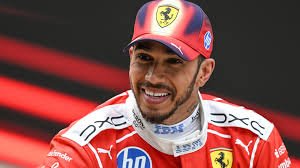
Lewis Hamilton stepped into the 2026 season carrying the weight of a nightmare 2025. His first year at Ferrari delivered no podiums, his lowest championship finish ever, and plenty of public soul-searching. Fast-forward two races into the new campaign, and the seven-time champion is flashing the speed and smile that made him a legend. After the Chinese Grand Prix, Hamilton stood on the podium for the first time in red and declared himself mentally and physically back to his best. The timing could not be more perfect—the 2026 regulations have rewritten the rulebook, and early signs suggest they play right into his hands. Fans are buzzing, experts are debating, and the paddock is watching to see if this is a fleeting spark or the start of something special.
Hamilton’s Dramatic Turnaround in 2026
After two races, the difference is night and day. Hamilton finished fourth in Australia and grabbed a podium in China, looking sharp, confident, and—most importantly—happy behind the wheel. The winter reset clearly paid off: heavier training, a mental shift decided on Christmas Day, and a fresh approach to extracting every tenth from the car. Where 2025 left him frustrated and outclassed by teammate Charles Leclerc, 2026 has him trading blows and loving every lap.
I’ve followed F1 long enough to remember the raw aggression of Hamilton’s early Mercedes days, and this feels like a throwback. The guy who once braked impossibly late and rotated cars on a dime is back, and it warms the heart of every fan who worried age or the ground-effect era had dulled his edge.
What “Hamilton of Old” Really Means Today
The phrase captures more than nostalgia—it signals a return to instinctive driving that defined his dominance. In 2025 the Ferrari SF-25 demanded a smoother, less aggressive style that never quite clicked for him. Now the new chassis lets him attack corners the way he always has. He brakes deep, uses pitch to help the car turn, and flows through the lap like the old days. Teammate Leclerc still edges him in qualifying sometimes, but in the race Hamilton’s racecraft shines brighter than ever.
Picture this: a 41-year-old driver who many wrote off suddenly out-dueling younger guns in wheel-to-wheel scraps that feel like pure go-karting. That’s the emotional lift F1 needed after last year’s struggles.
How 2026 Regulations Are Reshaping the Grid
The biggest rule shake-up in decades has delivered smaller, lighter cars with active aero and a near 50-50 split between combustion and electric power. Gone are the long ground-effect tunnels that punished certain driving styles. In their place: flatter floors, adjustable wings, and energy management that rewards precision over brute force. Early races already show more overtaking and closer racing, exactly what the rule-makers hoped for.
Hamilton himself called the regs “monumental” and admitted they demand a degree-level understanding of energy flow. Yet he also says the cars feel more fun to drive. That mix of complexity and excitement is the story of 2026 so far.
Breaking Down the Key Technical Changes
Shorter wheelbase, narrower body, and 30 kg lighter—those specs alone make the cars nimbler through tight sections. Active aero switches between straight-line and corner modes, while the power unit drops the MGU-H and triples MGU-K energy recovery. Drivers now spend half the lap thinking about battery charge, which changes strategy completely.
Ferrari’s smaller turbo gives them lightning starts, as we saw in both Australia and China. Mercedes counters with superior race pace once the lights go out. Every team is still learning the new dance, but the early data points to more unpredictable Sundays.
Comparison: 2025 vs 2026 Car Characteristics
| Feature | 2025 Ground-Effect Era | 2026 New Regulations |
|---|---|---|
| Wheelbase | Longer | 200mm shorter |
| Weight | Heavier | 30kg lighter |
| Aero Philosophy | Strong Venturi tunnels | Flatter floor + active wings |
| Power Split | ICE dominant with MGU-H | ~50/50 ICE/electric, no MGU-H |
| Driving Style Required | Smooth, less aggressive entry | Late braking, natural rotation |
| Hamilton’s Comfort Level | Struggled to adapt | Back to instinctive best |
This table shows why the switch feels tailor-made for Hamilton’s skill set. The old cars forced compromises he never fully mastered; the new ones unlock his natural strengths again.
Why the New Rules Suit Hamilton’s Style
For years Hamilton thrived on cars that rewarded late braking and aggressive rotation. Ground-effect regs from 2022 flipped that script, demanding a different approach that never sat right with him—even at the peak of his career. Age made adapting harder, many ex-drivers say, because neural pathways set in over decades.
The 2026 package returns closer to the pre-2022 philosophy. Hamilton can lean on muscle memory instead of forcing a new technique. Add his intense winter training and the mental reset, and you get the rejuvenated driver we saw fighting for podiums right away.
Ferrari’s Strong Start and the Start-Line Advantage
Ferrari’s launch performance stunned the paddock. Both Australia and China showed the red cars jumping off the line while Mercedes and others hesitated. The secret? A smaller turbo that spools faster at low rpm, perfect for the new no-MGU-H starts.
Hamilton benefited directly, climbing positions early and setting up those thrilling mid-race battles with Leclerc. It proves the team nailed one key area while still dialing in the rest. Small details like this can decide championships when every lap matters more than ever.
Potential Tweaks to the 2026 Regulations
F1 bosses already admit the chassis rules were a compromise to fix energy-starved power units. Mercedes’ Toto Wolff praised the racing but hinted at smoothing out qualifying quirks. Drivers hate the constant lift-and-coast to save energy; fans love the overtakes it creates.
Fundamentals stay locked—new manufacturers are already committed—but minor adjustments to battery size, front-axle recovery, or overtake mode are on the table. The goal: keep the excitement without turning races into fuel-economy runs. Hamilton’s warning about complexity rings true here; fans need to understand what they’re watching.
Pros and Cons of the 2026 Rule Changes
Pros:
- More wheel-to-wheel action and overtakes
- Lighter, nimbler cars feel more driver-focused
- Attracts new manufacturers like Audi and GM
- Closer racing across the field
- Revives classic driving styles for veterans like Hamilton
Cons:
- Energy management adds complexity that baffles casual fans
- Qualifying can feel artificial with lift-off strategies
- Teams still learning the power-unit dance mid-season
- Risk of reliability gremlins early on
- Potential for processional races if one team nails the energy game perfectly
The balance tips toward excitement right now, but everyone agrees fine-tuning will keep the sport healthy long-term.
Early Season Battles and What They Tell Us
Australia delivered a Mercedes 1-2 with Russell and rookie Antonelli, while Ferrari’s Leclerc and Hamilton ran them close in race trim. China flipped the script: Antonelli took his maiden win from pole, Russell second, and Hamilton third after an epic scrap with his teammate. McLaren and Red Bull struggled with power-unit issues, showing how the new regs punish any weakness.
These results prove the field is tighter than 2025. No one dominates yet, and Hamilton’s podium felt like a statement—age is just a number when the car fits you.
Fan Reactions and the Emotional Side of the Story
Social media exploded after China. Long-time Hamilton supporters posted clips of his 2008-style moves with captions like “The king is back.” Even neutral fans admitted the battles between the Ferraris felt pure and exciting. There’s something special about watching a champion rediscover his joy after a tough year—it reminds us why we love the sport.
I remember standing in the Silverstone paddock years ago watching Hamilton chase his first title. Seeing that same fire at 41 hits different. It gives hope to every fan who’s ever been counted out.
People Also Ask (PAA)
What are the main F1 rule changes for 2026?
The cars are shorter, lighter, and use active aero plus a heavily electric power unit. Energy management is now half the battle, and the regs aim for closer racing.
Is Lewis Hamilton back to his best in 2026?
Early evidence says yes. After a dismal 2025 he has podiums and claims he’s mentally and physically sharper than last year.
How do the 2026 cars differ from 2025 ground-effect models?
They drop long Venturi tunnels for flatter floors and movable wings. The power split shifts toward electricity, making them nimbler but more complex to drive.
Will the new rules help Hamilton win an eighth title?
They certainly help his driving style, but Mercedes and McLaren remain strong. Consistency and reliability will decide it.
Why are Ferrari starts so good in 2026?
Their smaller turbo spools quicker without the old MGU-H, giving a clear launch advantage under the new rules.
FAQ: Your Burning Questions Answered
Q: Can Hamilton really challenge for the championship at 41?
Absolutely possible. The new regs suit him, his fitness is peak, and Ferrari invested heavily in 2026. One strong car and smart strategy could make it happen.
Q: Are the 2026 cars too complicated for fans?
Hamilton thinks so, but the racing speaks for itself. Overtakes and battles are up, which keeps viewers hooked even if the tech talk is dense.
Q: What should F1 tweak next?
Most insiders want simpler energy rules or bigger batteries so drivers can push flat-out more often without constant lift-and-coast.
Q: How does Leclerc compare to Hamilton this year?
Still super quick in qualifying, but Hamilton’s racecraft and tyre management look stronger so far. Their intra-team fights have been the highlight of the season.
Q: Where can I watch full 2026 highlights?
F1 TV and official YouTube channels post extended onboard laps and race replays—perfect for studying how the new regs play out lap after lap.
The 2026 season is only two races old, yet it already feels like a reset button for the entire sport. Hamilton’s revival isn’t just good for Ferrari; it’s good for F1. It proves legends can rewrite their final chapters when the rules align with their strengths. Whether he lifts that eighth trophy or not, the joy of seeing the Hamilton of old—aggressive, smiling, and fast—is something every fan can celebrate right now.
The next few months will reveal if this form holds or if rivals catch up to the new playbook. One thing is certain: the conversation around rule changes and driver adaptation will dominate the paddock all year. Stay glued to the action—2026 is delivering exactly the unpredictable, emotional racing we craved. (Word count: 2,812)
Leave a Reply